Blog / Little Rock Ford Service

3 Things to Know About Your Ford Service Schedule

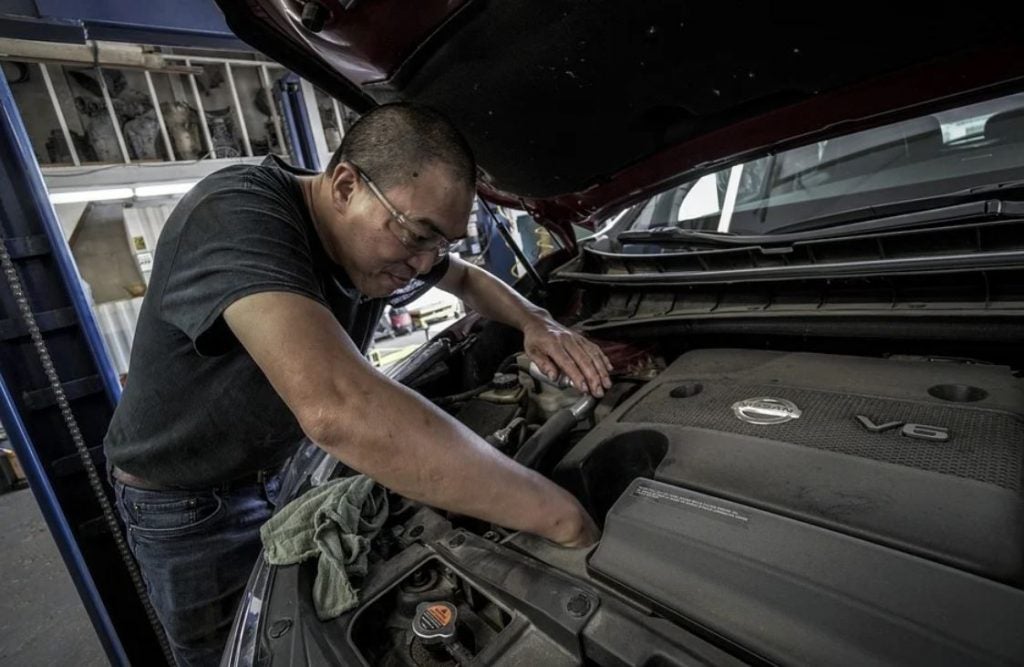
A service technician completing auto service under the hood of a vehicle. | Auto repair and maintenance in Little Rock, AR.

Every Ford model has a factory-recommended Ford service schedule with mileage intervals and the required maintenance needed to ensure optimal performance. To help Ford owners even further with scheduled maintenance, the Intelligent Oil-Life Monitor reminds drivers when an oil replacement is due. With regular maintenance, you will ensure that your Ford always performs at its best.

1. Engine Oil and Filter Replacement Intervals

The oil in your Ford keeps the engine clean and well-lubricated. The Ford Company recommends an oil and filter replacement every 5,000 to 10,000 miles, depending on your driving style, road conditions, and your vehicle's engine type. If you operate your vehicle under severe driving conditions, more frequent oil and filter replacements are required.

2. The Intelligent Oil-Life Monitor (IOLM) Reminder

The IOLM assists Ford owners by calculating precisely when an oil change is due. When the monitor reaches 5%, schedule an oil change at your Ford dealership. It's best not to wait until the IOLM counts down to 0% to avoid damage to the engine. The Ford technician will reset the IOLM after each oil and filter replacement.

3. Maintenance Intervals and Required Services

The following factory-recommended service intervals and required inspections and replacements are general guidelines. Look in your owner's manual for the recommended service intervals for your Ford model, or speak to a Ford technician.

5,000-Mile Maintenance Interval

  • Engine oil and filter replacement
  • Tire inspection and rotation

10,000-Mile Maintenance Interval

  • Engine oil and filter replacement
  • Engine cooling system and hoses inspection
  • Inspect and lubricate all non-sealed steering linkage
  • Inspect and lubricate ball joints, and suspension joints
  • Inspect and lubricate half and drive shafts and u-joints
  • Exhaust system and heat shields inspection
  • Inspect brake pads, rotors, and drums
  • Inspect brake lines and hoses
  • Parking brake system inspection
  • Check wheel end play and turning noise
  • Tire inspection and rotation

15,000-Mile Maintenance Interval

  • Engine oil and filter replacement
  • Transmission fluid level inspection
  • Brake system inspection
  • Engine cooling system and hoses inspection
  • Inspect wheel ends for endplay and noise
  • Inspect steering linkage and suspension
  • Check driveshaft and ball joints
  • Cabin air filter replacement
  • Tire inspection and rotation

20,000-Mile and 25,000-Mile Maintenance Interval

  • Engine oil and filter replacement
  • Tire inspection and rotation

30,000-Mile Maintenance Interval

  • Engine oil and filter replacement
  • Brake system inspection
  • Inspect wheel ends for endplay and noise
  • Engine cooling system and hoses inspection
  • Exhaust system inspection
  • Steering linkage and suspension inspection
  • Driveshaft and ball joints inspection
  • Engine air filter replacement
  • Fuel filter replacement
  • Cabin air filter replacement
  • Transmission fluid change
  • Drive belt inspection
  • Tire inspection and rotation

35,000-Mile and 40,000-Mile Maintenance Interval

  • Engine oil and filter replacement
  • Tire inspection and rotation

45,000-Mile Maintenance Interval

  • The 30,000-mile maintenance services will be repeated
  • Fluid replacements

50,000-Mile Maintenance Interval

  • Engine oil and filter replacement
  • Tire inspection and rotation

100,000-Mile Maintenance Interval

  • The 10,000-mile maintenance services will be repeated
  • Coolant replacement
  • Spark plugs replacement
  • Accessory drive belt inspection
  • Cabin air filter replacement

150,000-Mile Maintenance Interval

  • The 10,000-mile maintenance services will be repeated
  • Coolant replacement
  • Transmission fluid and filter replacement
  • Timing belt replacement
  • Front and rear axle lubrication
  • Change transfer case fluid.
  • Replace accessory drive belts

The service schedule and IOLM help you keep your Ford running smoothly and on the road for longer. Visit Crain Ford of Little Rock today for an expert maintenance service performed by a trained Ford technician to ensure that your vehicle continues to be tough and reliable.
Posted in:

Related Posts

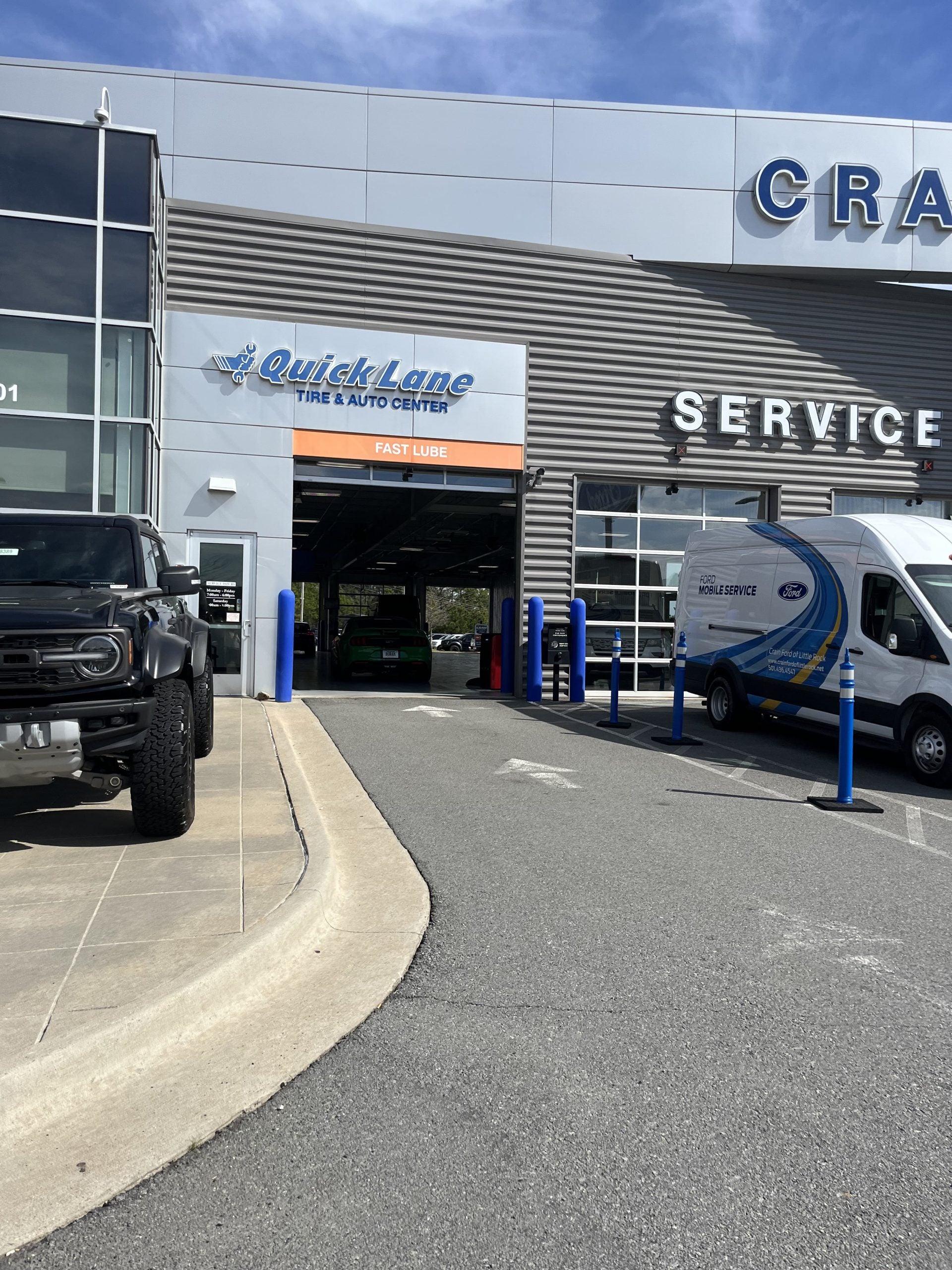
Crain Ford of Little Rock Service Department in Little Rock AR

Genuine Ford Parts vs. Aftermarket: What’s the Difference?

When your vehicle needs a repair, the parts you choose can make a big difference. At Crain Ford of Little Rock, many drivers ask us whether it’s better to go with genuine Ford or aftermarket parts. While both options are available, they are not the same in quality, fit, and performance. If you’re driving around Little Rock, North Little Rock, Bryant, or Sherwood, and want to make the right call for your Ford car, truck, or SUV, this guide will help you decide. 🔧 What Are Genuine Ford Parts? Genuine Ford parts, also known as OEM (Original Equipment Manufacturer), are made by Ford or by a company that works directly with Ford. These are the same parts used when your vehicle was built at the factory. Advantages of Genuine Ford Parts: Designed to Fit: Made for your specific make and model Reliable Performance: Built to meet Ford’s quality and safety standards Covered by Warranty: Most OEM parts come with a Ford-backed warranty Long-Term Value: Helps maintain your car’s resale value At Crain Ford of Little Rock, we commend OEM parts when repairing your vehicle because they’re built to last and protect your investment. 🛠️ What Are Aftermarket Parts? Aftermarket parts are produced by companies that are connected to Ford. They're often built to fit many vehicles, not just one model. While some aftermarket brands are high-quality, others may not meet the same standards as Ford parts. Some Pros of Aftermarket Parts: Lower Price: Often less expensive than OEM parts More Brands: You’ll find a wider variety of choices Special Features: Some parts offer custom looks or added performance That said, not all aftermarket parts are created equal. A poor fit or cheap material could lead to problems down the road. ⚠️ Why Little Rock Drivers Should Choose OEM Parts Driving in Central Arkansas means you deal with everything from city traffic to country roads. Whether you drive a Ford F-150, Bronco, Escape, or Explorer, you need parts you can rely on. Using genuine Ford parts helps make sure your vehicle stays safe, runs smoothly, and holds its value. That’s why drivers from Little Rock, Benton, and Maumelle come to us for parts made to last. 🧩 What Could Go Wrong With Aftermarket Parts? Choosing the wrong part can lead to issues like: Rough engine performance Warning lights are turning on Faster wear on other parts Voided warranty coverage Safety concerns At Crain Ford of Little Rock, our certified technicians install the right parts the first time, so you don’t have to worry about surprises. 🚘 Get the Right Parts at Crain Ford of Little Rock If you need a replacement part, trust the experts at Crain Ford. We carry a complete inventory of genuine Ford parts that are in stock and ready to install. Our service team will ensure everything fits perfectly and works just like new. We serve drivers all over Little Rock, including North Little Rock, West Little Rock, and Alexander, with honest service and expert care. 🗓️ Schedule Your Ford Service Today Do you need a new battery, brake pads, filters, or something else? Visit Crain Ford of Little Rock on Colonel Glenn Road for quality Ford parts and top-rated service. Book your appointment online or call today to learn more. Keep your vehicle running its best with parts made just for it.

5 Signs Your Ford Has a Faulty Ignition Coil

If your car starts sputtering and shaking one day, you might have a faulty ignition coil. The ignition coil in each of the engine's cylinders generates a high voltage of electricity that allows the spark plugs to keep igniting the fuel. So when an ignition coil fails, the engine struggles to function as usual. Here are five signs that you may need to have at least one ignition coil replaced at your local Ford dealership. Your Engine Sounds Unhealthy Ordinarily, the engine of a modern Ford car should have a smooth and healthy sound at all times. If you notice it suddenly starts to sputter, cough, and judder, then a spark plug inside your cylinders is probably misfiring. This might be due to a problem with the spark plug itself, or perhaps the airflow into the combustion chambers has been disrupted. But it might also be a failing ignition coil that's no longer providing sufficient voltage for the spark plug to function properly. You're No Longer Idling Smoothly Whenever you pause to rest in idle, such as when waiting at an intersection, your engine is put under a little more pressure. But if everything is working well, the engine shouldn't have any trouble with idling, even for extended periods. When an ignition coil is failing, however, at least one combustion chamber will really start to find idling very difficult. This is why you're most likely to first notice misfiring when you slow down or pause with the engine still on. Your Car Suddenly Stalls When an ignition coil gives out altogether, the spark plug won't fire at all. In this case, you might find yourself suddenly stalling at inopportune moments. You might also have trouble starting your engine again, especially if more than one ignition coil has failed. Your Car Starts Backfiring When a faulty coil causes misfiring, an excess of unburned fuel can build up inside the combustion chamber. This excess fuel may eventually start seeping back into the exhaust system, where it can ignite, causing a loud bang and black smock to emerge from the tailpipe. Your Check Engine Light Comes On Fortunately, modern Ford vehicles are equipped with an impressive array of highly sensitive computerized sensors. These sensors will usually pick up on the problems caused by a faltering ignition coil before you do. You'll then see the check engine light come alive on your dashboard, prompting you to have a technician take a look. How Often To Replace Ignition Coils at Your Ford Dealer High-quality OEM ignition coils in modern Ford cars can last 100,000 miles or more in a well-kept car. But sometimes this lifespan can be diminished by a faulty spark plug or other combustion chamber problems. The excessive heat and dusty environments we sometimes have around Little Rock also tend to take a toll on ignition coils. Have your ignition coils checked, repaired, or replaced today at Crain Ford of Little Rock. We're a family-owned dealership with family members working on-site every day, and we believe in treating our customers like family too.

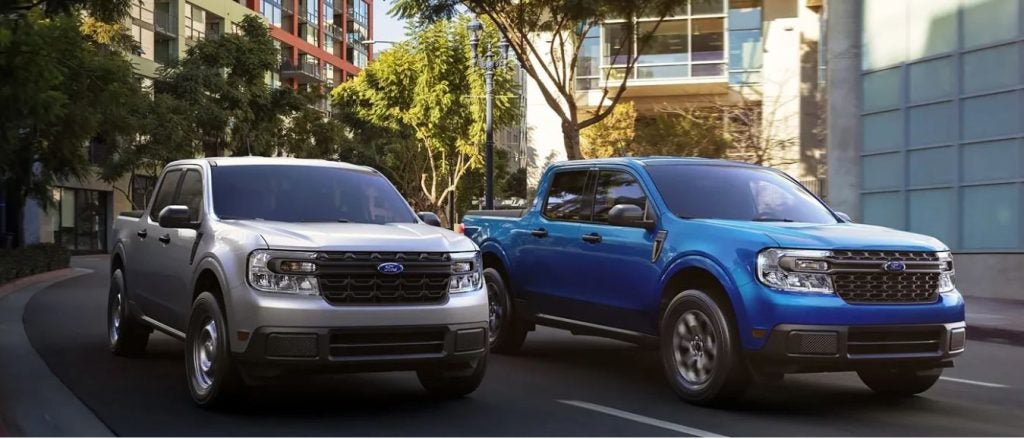
A silver and a blue Ford Maverick driving beside each other on the road. | Ford dealer in Little Rock, AR.

5 Great Safety Features You'll Find in Vehicles from Your Ford Dealer

There's no question that staying safe on the road is the top priority for any driver, and modern safety features have made driving safer than ever before. Leading the way in striving to make the road a safer place is Ford. To give you an idea of the comprehensive protection you'll get when you choose a vehicle from your Ford dealer, here are some of the safety technologies Ford equips their vehicles with. 1. Blind-Spot Information System with Cross-Traffic Alert One of the most common dangerous situations that can occur while driving is a vehicle riding behind you in the blind spot on either side of your vehicle where you are unable to see them. Ford's blind spot information system helps you feel more certain when merging or changing lanes. Cameras and sensors monitor the blind spots you can't see, giving you an alert when there's an obstacle in your path. 2. Lane-Keeping System Using cameras and sensors like the blind-spot information system utilizes, your Ford can also help to keep your vehicle centered in your lane. When you inadvertently drift to the boundaries of your intended lane in traffic, this system gives you a heads-up to let you know to guide yourself back to where you need to be. You'll even see a warning if this system has been triggered frequently in your drive, letting you know it's time to take a break. 3. Intelligent Adaptive Cruise Control Highway driving can become dangerous if you're following other vehicles too closely, but the intelligent adaptive cruise control system can help mitigate that danger. Improving upon the cruise control feature you may already be familiar with, this system is able to monitor the speed and distance of other vehicles on the road with you. It uses that information to adjust your cruise control speed to maintain a safe separation from other drivers. 4. Active Park Assist Although it may seem safe due to the slow speeds vehicles tend to be traveling at, a significant portion of accidents occur in parking lots or when parallel parking. Ford's Active Park Assist system can help take the danger out of this potentially hazardous situation by automating the process. With just the press of a button while you're near a parking spot, this system will automatically navigate your vehicle into the spot. 5. Pre-Collision Assist with Automatic Emergency Braking While the systems above help to avoid an accident, Ford's safety technologies are also there for you in the worst-case scenario of a collision. The pre-collision assist system will alert you if you're coming up too quickly on an obstacle, ideally giving you time to take corrective action and avoid an impact. However, if a collision is unavoidable, the automatic emergency brake system kicks in to reduce the force of the impact, mitigating the chance of injury. Learn more about the ways your Ford can help make your drive safer when you talk to our experienced team of experts. Visit us at Crain Ford of Little Rock today! Image via Ford.